

12 Dec How We Make Pharmacists Happy: Designing Pharmacies That Truly Work
How We Make Pharmacists Happy: Designing Pharmacies That Truly Work
When a pharmacist walks into our headquarters for the first time, they bring something far more valuable than a simple renovation project. They carry years of experience behind the counter, accumulated frustrations, postponed dreams, and that feeling that their pharmacy could be something more, much more than what it is today. And it’s precisely in that moment that our most important work begins: transforming that nebulous vision into a concrete reality that can truly make a difference.
A pharmacist’s happiness doesn’t stem from new flooring or more modern shelving. It emerges when they can finally work in a space that doesn’t obstruct them but supports them, when customers walk in and immediately perceive they’re in a different kind of place, when the team can move fluidly without stumbling over inefficient layouts designed decades ago. Professional happiness is born when the pharmacy stops being a constraint and becomes an ally in the mission of serving the community.
Over these years, we’ve understood that our role extends far beyond architectural design. Certainly, we draw spaces, select materials, optimize flows. But what we really do is listen. We listen to the unspoken needs, those that emerge between the lines when a pharmacist tells us about the elderly lady who struggles to reach the counter, the young father who never finds where to park his stroller, the dermocosmetics department that could generate triple the revenue if only it were positioned differently.
Every project begins with a fundamental question: how does this pharmacy live today and how should it live tomorrow? We’re not talking about aesthetics for their own sake, but intelligent functionality that translates into daily wellbeing. When we design a new layout, we’re actually designing less stressful workdays, more satisfied customers, more motivated teams. We’re designing the possibility for the pharmacist to return home in the evening with energy still to spend on their own family, instead of completely depleted by a space that works against them.
The real revolution happens when the pharmacist understands that their pharmacy isn’t just a retail point but a strategic tool. A tool that can attract instead of repel, that can communicate professionalism before a word is even spoken, that can transform an occasional customer into a loyal community member. And this tool must be calibrated with millimeter precision to the specifics of that territory, that clientele, that particular professional identity.
Working with pharmacists also means confronting legitimate resistance. Change frightens, especially when you’ve built something with effort over the years. But this is precisely where our international experience comes into play: we can show what really works, what’s just passing fashion, which investments generate concrete returns and which are simply waste masked as innovation. We bring evidence, case studies, numbers that speak clearly. Because professional happiness also comes from the awareness of having made intelligent and sustainable choices.
The moment of final delivery is always charged with emotion. Seeing the eyes of a pharmacist entering their transformed pharmacy for the first time is one of the greatest privileges of this profession. It’s not just aesthetic satisfaction, it’s the realization that finally the space reflects their professional vision. It’s seeing the team moving naturally in an environment designed for them, it’s hearing the first enthusiastic comments from customers who perceive the change not only with their eyes but with all their senses.
But our task doesn’t end with the ribbon cutting. We continue to follow the pharmacy’s evolution, to support with communication strategies that enhance the investments made, to progressively integrate technological solutions that make the customer experience increasingly fluid and personalized. Because a modern pharmacy is a living organism that must be able to evolve with the times, and we want to be partners in this continuous growth.
Making pharmacists happy also means giving them back time. Time that today gets devoured by inefficiencies hidden in every corner of the pharmacy: dead spaces that serve no purpose, tortuous paths that multiply necessary steps, chaotically organized stockrooms that turn every search into a treasure hunt. When we optimize these aspects, we’re not just improving aesthetics, we’re literally gifting precious hours that can be reinvested in what truly matters: relationships with people.
And then there’s the economic dimension, the one too often neglected in discussions about architecture. A well-designed pharmacy sells more, not by magic but by logic: products are displayed better, customers move more naturally toward certain areas, professional services have dedicated spaces that emphasize their perceived value. We’ve seen revenues grow by thirty, forty percent simply because the space finally worked in favor of the business instead of against it.
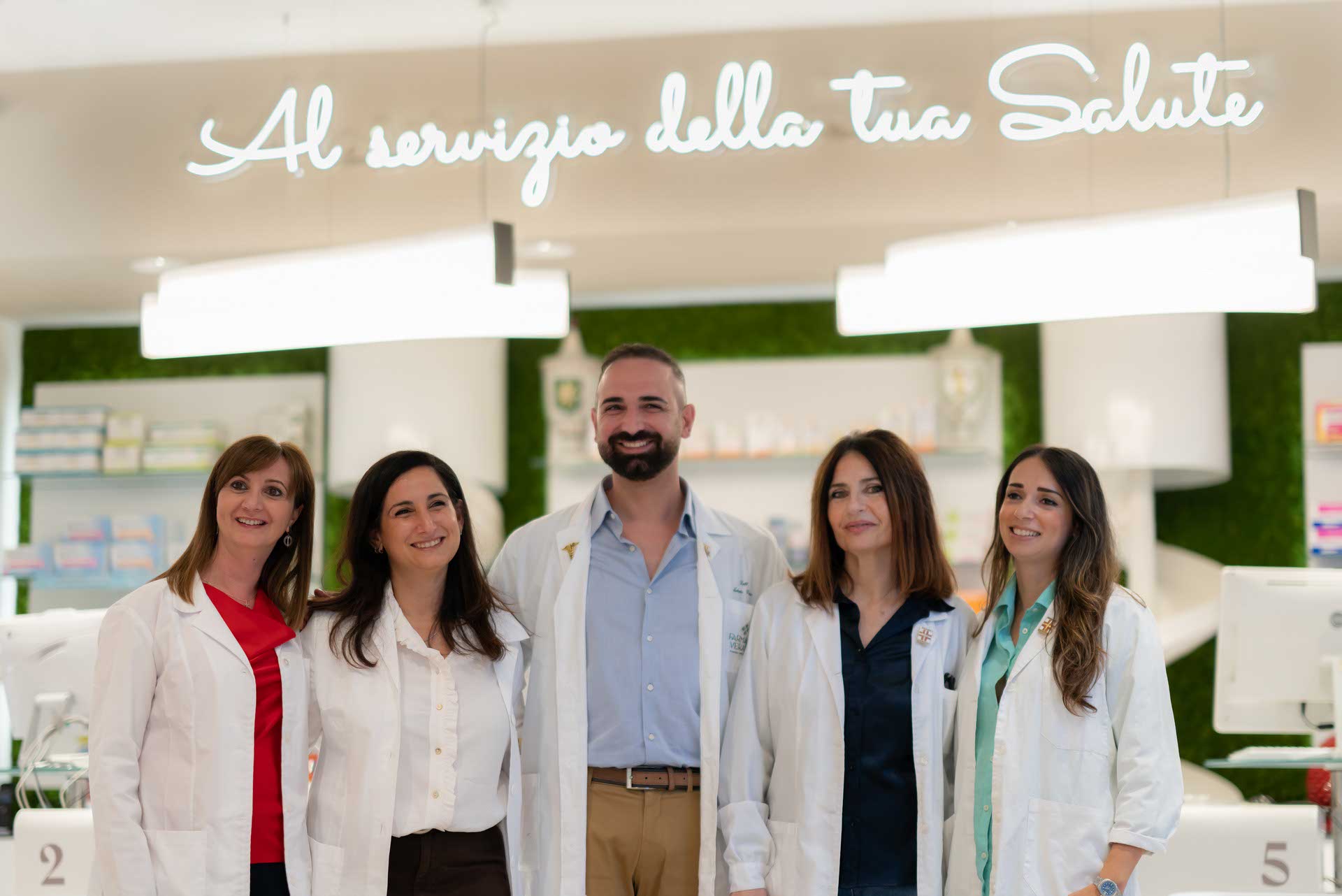
The pharmacist’s happiness is also their team’s happiness. When we design, we think about those who will spend eight hours a day in those spaces. Ergonomics isn’t a technical detail but the foundation of workplace wellbeing. Counters at the right height, lighting that doesn’t strain, acoustics that allow private conversations without whispering, climate control that doesn’t create hot or cold zones. These are the details that make the difference between an environment where you survive and one where you thrive.
What deeply fascinates us about this work is the possibility of contributing to the transformation of the entire perception of the pharmacy in the urban fabric. Every project we realize is a small seed demonstrating to the community what a contemporary pharmacy can be: no longer a place you visit out of necessity with certain reverential fear, but a welcoming space where wellbeing is tangible, where you feel heard and supported in your health journey.
Making pharmacists happy also means helping them stand out in an increasingly competitive market. When competition is played only on price, everyone loses. But when you manage to build a strong, recognizable identity based on excellence of experience offered, then you create something defensible and lasting. Our integrated approach, combining architecture, communication and digital strategy, allows building this differentiation in a coherent and authentic way.
In the end, a pharmacist’s professional happiness is measured in the ability to get up every morning with the desire to go to their pharmacy, not out of obligation but renewed vocation. It’s measured in the awareness of offering something unique to their community, of being not just a medicine dispenser but a reference point for health and wellbeing. And when this happens, when we see pharmacists who have rediscovered enthusiasm and vision, then we know we’ve done our job well.
Related Articles
Pharmasave Pharmacy – A human-centered transformation inside Toronto’s Hospital
25 November 2025
A brighter, smarter Pharmasave: more exposure, clearer navigation, and a welcoming atmosphere inside Toronto’s hospital.

How We Make Pharmacists Happy: Designing Pharmacies That Truly Work
12 December 2025
A pharmacy is not just a retail space. It is a strategic tool for wellbeing, efficiency and growth. Here is how we design pharmacies that truly support pharmacists, teams and communities.

Discovering Sartoretto Verna Means Redefining the Role of the Modern Pharmacy
13 January 2026
A strategic approach to pharmacy design that transforms space into value, strengthening the pharmacist’s role and client experience.